DIALOG WITH JÓZSEF ATTILA – 2


DIALOG WITH JÓZSEF ATTILA – 2

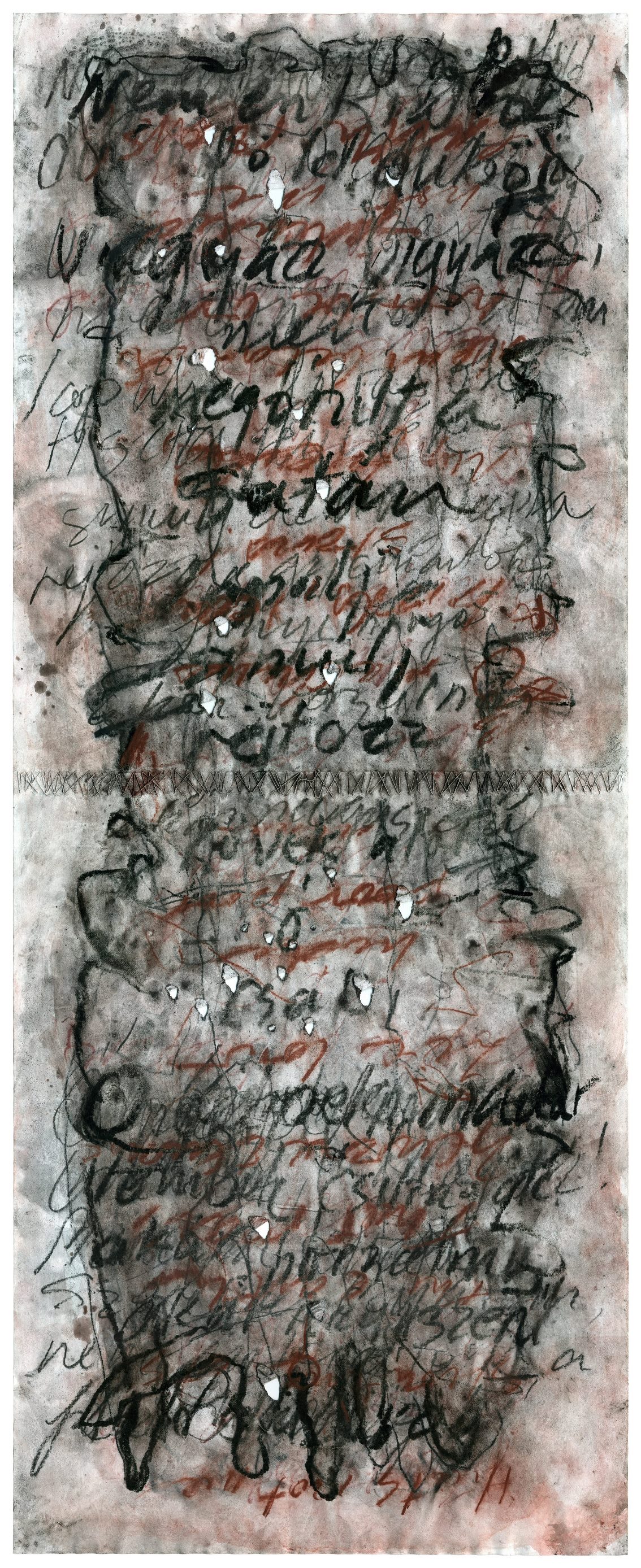
Dialog with J.A. - 2

Mixed-media on stitched, gessoed paper.
28″ x 11″ (70c x 28c)
2017


THAT’S NOT ME SHOUTING
by Attila József

That’s not me shouting, it’s the earth that roars,
beware, beware, for Satan is raving,
better lie low deep in a clear stream,
flatten yourself into a plane of glass,
hide behind the light of diamonds,
among insects under stones,
go hide inside the fresh-baked bread,
you poor man, you poor man.
With the fresh rain seep into the ground,
it’s useless to plunge into yourself
when only in others’ eyes can you bathe your face.
Be the edge of a small blade of grass,
you’ll be greater than the world’s axis.
O machines, bird’s, leaves and stars!
Our barren mother is praying for a child.
My dear friend, my dear, beloved friend,
it may be horrible or splendid, but
that’s not me shouting, it’s the earth that roars.

early 1924

Translated from the Hungarian by John Bátki.
“Winter Night. Selected Poems of Attila József.
Oberlin College Press. 1997.


NEM ÉN KIÁLTOK
József Attila

Nem én kiáltok, a föld dübörög,
Vigyázz, vigyázz, mert megõrült a sátán,
Lapulj a források tiszta fenekére,
Símulj az üveglapba,
Rejtõzz a gyémántok fénye mögé,
Kövek alatt a bogarak közé,
Ó, rejtsd el magad a frissen sült kenyérben,
Te szegény, szegény.
Friss záporokkal szivárogj a földbe –
Hiába fürösztöd önmagadban,
Csak másban moshatod meg arcodat.
Légy egy fûszálon a pici él
S nagyobb leszel a világ tengelyénél.
Ó, gépek, madarak, lombok, csillagok!
Meddõ anyánk gyerekért könyörög.
Barátom, drága, szerelmes barátom,
Akár borzalmas, akár nagyszerû,
Nem én kiáltok, a föld dübörög.

1924 elsõ fele


DIALOG WITH JÓZSEF ATTILA – 1


DIALOG WITH JÓZSEF ATTILA – 1

Dialog with J.A. - 1

Mixed-media on stitched, gessoed paper.
28″ x 11″ (70c x 28c)
2017


I SAW BEAUTY
by Attila József

I saw beauty, sweetness: I was
thinking of a rose.
And reality, like a falling rock,
crashed down on my head.

But even the rock is an image.
It’s best to say this simply,
the daily grind has
taught me.

My instincts were on the right track.
When the man entered, they roared
like waves, ‘He’s here
to disconnect the lights.’

The knife lay on the table.
(I was sharpening a pencil.)
To stab him would have meant
getting even with everything.

I was desperate: all would be
dark and sad around me.
But though animals may defend their lairs,
ours is a different war.

Violence would have been weakness.
I’d lose, and what’s worse, lose
my kindness. Law and order
means the rule of money;

warfare has changed its rules.
Our heroes never touch their guns.
They just throw banknotes that
explode into smallchange shrapnel.

Having reasoned this out, I said hello,
tuned in and went to sleep.
I woke to the light
of the full moon and the smiling stars.

June, 1937.

Translated from the Hungarian by John Bátki.
Attila József. Selected Poems and Texts.
Edited by George Gömöri András and James Atlas.
Carcanet Press. University of Iowa. 1976.


GYÖNYÖRŰT LÁTTAM
József Attila

Gyönyörűt láttam, édeset,
elképzeltem egy gyenge rózsát.
Elbámészkodtam s rám esett,
mint nagy darab kő, a valóság.

Ám ez a kő is képletes.
A legjobb, ha mindent kimondok.
Igy oktatnak ügyeletes
és tanulságos napi gondok.

Lám, ösztönöm helyes nyomon
járt, amikor bejött az ember.
“Kikapcsolja a villanyom” –
ez zúgott bennem, mint a tenger.

A kés ott volt az asztalon
– éppen a ceruzám hegyeztem –
ha ezt az embert leszurom,
tudom, mindennel kiegyeztem.

El voltam keseredve. Hát.
Minden sötét és szomorú lesz.
Állat védheti otthonát;
hanem másfajta háború ez.

Fegyvert ragadni gyengeség:
megöl az ellenség és megver
s elszáll rólam a kedves ég.
Jogállamban a pénz a fegyver.

A hadviselés itt ma más.
A hős a kardot ki se rántja.
Bankó a bombarobbanás
s mint fillér, száll szét a szilánkja.

Igy okoskodtam s jónapot
kivánva elhuzódtam oldalt
s este a nyájas csillagok
rámnevettek a teli holddal.

június. 1937.

Source of the quotation: http://www.mek.oszk.hu


DIALOG WITH JÓZSEF ATTILA – 3


DIALOG WITH JÓZSEF ATTILA – 3

Dialog with J.A. - 3

Mixed-media on stitched, gessoed paper.
28″ x 11″ (70c x 28c)
2017


THE RAIN FALLS
by Attila József

I stand by a puddle and watch it grow,
become a mire, just doing its job.
Tail between legs, a dog
creeps up to sniff my leg.
The heavens are swollen
with their business,
salvation. The Bishop’s fat lands
blink, and get fatter.
I try to whistle
but only steam comes out
so I steam beautifully
and look important, calm, collected,
like a weed. An old dreamer,
I sink into dreams.

I used to whistle in my breezier days.
Now the rain falls to nourish mud and elders.
Only a cool carrot on the ground,
A harmless paintbrush, and myself
can hear it and give thought.

The sluggish, nationwide rain
laments my thinning hair.

I am a growler, so I growl,
and a stroller, so I stroll:
paddles are never needed on this highway.

My shoes mumble and grumble.
This is too much even for boots.

A pumpkin fidgets. The haystack mopes.
This rain falls on barefoot people,
falls on workers out of work,
falls on the trembling tower,
on estates and on the soft soil,
on cave-dwelling migrant workers,
on cushioned suburban homes,
the rain falls, just doing its job.

Sluggish, nationwide rain,
heavy with complaints.

1929

Translated from the Hungarian by John Bátki.
Attila József – Selected Poems and Texts.
Edited by George Gömöri András and James Atlas.
Carcanet Press. University of Iowa. 1977.


ESIK
József Attila

Állok, lábamnál tócsa nő
a pocsolyához – az a dolga.
Bevont farokkal bú elő
az eb, hogy lábam megszagolja.
Kövér az ég, az üdv a gondja,
pislog, dagad a püspök dombja,
fütyülnék s számra pára jő –
hát megfontoltan, mint a dudva,
gőzölgök szépen, komolykodva,
révedek én is, révedő.
Fütyültem könnyedébb koromba…
Esik, hogy nőjön sár meg bodza,
csak egy hűvösen heverő
répa, egy jámbor meszelő
meg én hallgatjuk gondolkodva.
Lassudad, országos eső
hulló hajamat panaszolja.
Dörmögő vagyok, dörmögő.
Meg ballagó, hisz evező
nem kell soha az országútra!
És dünnyög, motyog a cipő,
hogy csizmának is elég volna.
Feszeng a tök, busong a boglya,
esik a mezitlábasokra,
a munkátalan munkásokra,
esik a remegő toronyra,
a lágy talajra, tulajdonra,
gödörlakó kubikusokra,
párnás, polgári lakásokra,
esik, esik, hisz az a dolga.
Lassudad, országos eső,
nehézkedve és panaszkodva.

1929. július.

source of the quotation: http://www.mek.oszk.hu/00700/00708/html/kolto00000/kotet00001/ciklus00368/cim00371.htm